
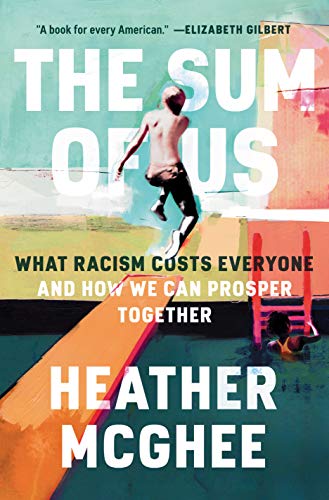
Heather McGhee’s “The Sum of Us” made me realize (once again) how much I don’t know or more precisely, how much I thought I knew.
“The Sum of Us” is a tough read. Don’t get me wrong. It’s well-written and easy to understand. I’ve seen the author on television, so I could imagine Heather McGhee saying the words as I read them.
So why is this book a tough read? If you thought the U.S. GI Bill gave all World War II veterans the chance to get a low-cost mortgage and buy a home, then like me, you would be wrong. The GI Bill is just one of the book’s examples about the cost of division in the United States. “The Sum of Us” also describes the benefits of interconnectedness. The Curb Cut Effect A classic example of interconnectedness is known as “The Curb Cut Effect”. In 1990, the Americans with Disabilities Act required curb cuts on public sidewalks. Designed specifically for people using wheelchairs, the curb cuts allow for getting on and off the sidewalks safely. Yet, these curb cuts help more than wheelchair users – from pedestrians pushing strollers to drivers making deliveries. When you improve the lives of people with disabilities, you make things better for everyone. “The Sum of Us” considers how that same effect could be applied to improving the lives of people of color and making things better for everyone, no matter their race. All for One and One for All There is a worldview that one person’s gain is another’s loss – life as a zero-sum game. In this zero-sum game, some may feel like they’re getting played, but they’re putting the blame in the wrong place. As McGhee says in “The Sum of Us”, while it’s easy to scapegoat immigrants and people of color, “The scapegoats aren’t actually the ones paying you poverty wages.” Even when talking about race, you may hear someone say, “Oh, but I don’t see color.” Color blindness may make someone feel better about themselves, but it doesn’t make the world a better place. McGhee writes, “Instead of being blind to race, color blindness makes people blind to racism, unwilling to acknowledge where its effects have shaped opportunity or to use race-conscious solutions to address it.” The Sum of Us In the 1950s and 1960s, communities across the United States refused to integrate public resources like swimming pools. Instead, the public pools were drained and filled with dirt. If you know where to look, you can still see the metal railings of the old swimming pools among the weeds. Rather than drain public pools and create private clubs to exclude our fellow Americans, McGhee encourages us to “refill the pool of public goods” for everyone. See more Books to Read: The Reader on the 6.27 Once Upon a Tome No Time to Spare Read This for Inspiration Vivian Maier Developed Jane Austen: A Life 
Comments are closed.
|